
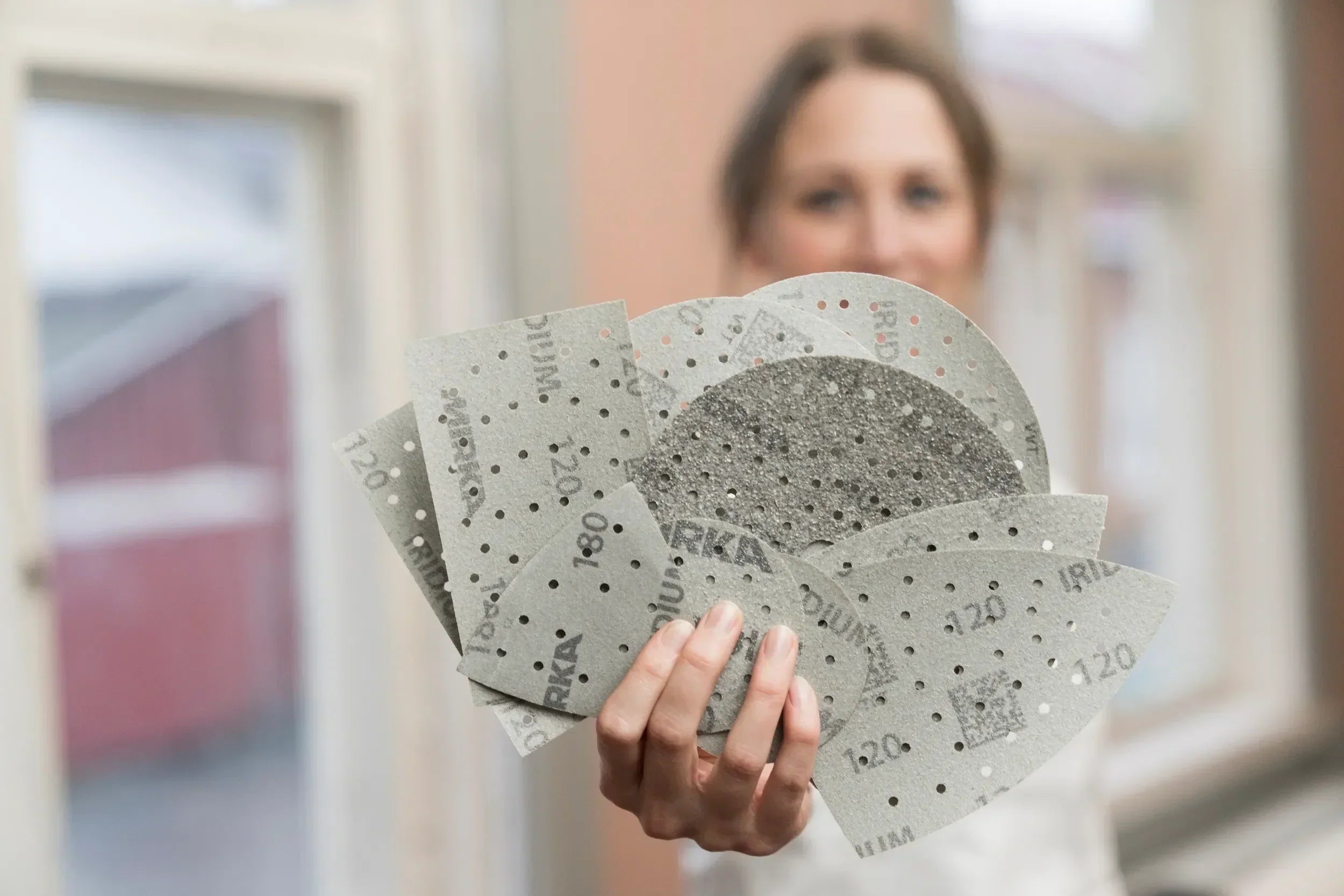
Choosing the wrong grit is one of the most common — and most costly — mistakes in professional finishing. Go too coarse and you leave scratches that show through the finish. Go too fine and you don’t get adhesion.
Understanding the Grit Scale
- P40–P80: Very coarse — shaping, stripping, aggressive stock removal
- P100–P180: Coarse — primer sanding, removing previous scratch patterns
- P220–P320: Medium — intercoat sanding, sealer prep
- P400–P600: Fine — finish sanding before topcoat
- P800–P1500: Very fine — denibbing, wet sanding clear coats
- P2000–P5000: Ultra fine — pre-polish, removing orange peel
Auto Body Grit Sequences
- Bare metal prep: P80 → P120 → P180
- High-build primer: P80 → P150 → P220, then P320 for spot repairs
- Fine primer / sealer: P320 → P400
- Basecoat adhesion scuff: P400 scuff pad or P500 disc
- Clear coat denibbing: P800 → P1000 dry, or P1200–P1500 wet
- Paint correction pre-polish: P2000 → P3000, then compound
Wood Finishing Sequences
- Raw hardwood: P80 → P120 → P150 → P180
- After stain, before sealer: P220 (light pass)
- After sealer: P180–P220 to knock down grain raise
- Between topcoats: P320–P400
- Final denibbing: P400–P600
Marine and Gelcoat
- Gelcoat repair blending: P80 → P120 → P180 → P320
- Wet sand before compounding: P600 → P800 → P1000 wet
- Final polish prep: P1500 → P2000 wet, then compound
Mirka Abralon foam-backed discs are ideal for curved hull surfaces and tight gelcoat work.
Abrasive Minerals: Which Is Best?
- Aluminum oxide: General purpose — wood, primer. Used in Mirka Gold.
- Ceramic alumina: Faster, self-sharpening, longer life. Used in Mirka Iridium and Abranet Ace.
- Silicon carbide: Hardest, ideal for wet sanding and ultra-fine finishing. Used in Mirka Abralon.
- Zirconia alumina: Tough grain for flap discs and metal grinding.
Questions about grit selection? Contact our team in Deer Park, NY — we work with these products every day.